
Posted October 05th 2025
The research hub marks a major step forward in transforming how we understand, diagnose, and treat severe mental health conditions like psychosis, schizophrenia, bipolar disorder, and schizoaffective disorder.
Backed by a £4.3 million investment from UK Research and Innovation (UKRI) and the Medical Research Council (MRC), the Brain and Genomics Hub is one of six new research hubs that make up the Mental Health Platform.
The Hub brings together an interdisciplinary community of researchers, clinicians, policymakers, and people with lived experience to drive meaningful progress in mental health.
The launch event welcomed voices from across this spectrum, signalling a collaborative and ambitious approach to tackling some of the most complex challenges in psychiatric care.
Improving diagnosis and treatment
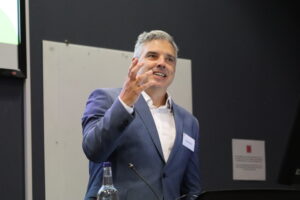
The Brain and Genomics Hub lead, Professor James Walters, outlined how the centre will take an integrated, whole-systems approach to improving diagnosis and treatment of severe mental illness, uniquely combining cutting-edge genomics, neuroscience, and lived experience to tackle the biological and social complexity of severe mental illnesses.
Professor Walters said: “By combining cutting-edge tools, the Hub hopes to improve early diagnosis, tailor treatments more effectively, and pave the way for more personalised care in mental health.
We currently treat people with a one-size-fits-all approach, resulting in a delay in receiving effective treatments and sometimes life-changing symptoms from medications. The Brain and Genomics Hub hope to change that. – Prof James Walters
Professor Walters then invited attendees to watch a short video outlining the work of the Hub, and featuring many of the team members who are integral to the ongoing success of the project.
Meet the Brain and Genomics Hub
Cardiff University Vice-Chancellor Professor Wendy Larner stated that she was proud that Cardiff University would be the centre of the Brain and Genomics Hub, referring to its world-leading genetics led by the Centre for Neuropsychiatric Genetics and Genomics (CNGG) and the Cardiff University Brain Imaging Centre (CUBRIC) as ‘two jewels in the project’s crown.’
Minister for Mental Health and Wellbeing, Sarah Murphy MS, both praised the Hub’s commitment to hearing the voices of those with lived experience of severe mental health conditions and to those individuals who ‘bravely’ share their stories to break the stigma around mental ill health.
Working with charity partners
The Hub is made up of a number of universities and third sector organisations working together to better understand serious mental illnesses and to better support the people living with these conditions.
The third sector organisations Adferiad and Bipolar UK are helping the Hub to put the lived experiences of people at the heart of their research.
Discussing her own experience of bipolar disorder, Professor Tania Gergel (Lived Experience Advisory Panel (LEAP) facilitator and Director of Research at Bipolar UK) said that she and her family had benefited first-hand from mental health research that has taken place at Cardiff University in the past years.
Helen Hancock from Bipolar UK and Alun Thomas, chief executive of Adferiad, also gave talks to outline their work with the Hub in representing patients affected by bipolar, psychosis, schizophrenia and schizoaffective disorder.
It takes 11.9 years on average to get a diagnosis of bipolar disorder in Wales (9.5 years in England), which is why the Hub’s work could be so crucial, helping to prompt earlier diagnosis and treatment. – Helen Hancock, Bipolar UK
Attendees later heard from other LEAP members who have contributed to the development of the Brain and Genomics Hub, from its B-Sprint study to the launch event.
Many members described the LEAP as a positive experience where everyone is heard and valued.
Carina, one of the LEAP members, shared her thoughts on taking part in the Hub’s flagship study, the Bipolar, Schizophrenia and Psychosis Research Initiative (B-SPRINT).
Aside from the impact on wider society, advising on this project has had an impact on my own learning. I also thought that taking part in the B-SPRINT study was really fun. – Carina
A networking and information fair
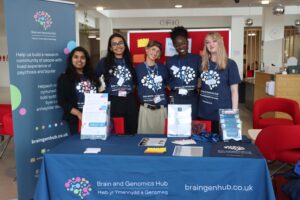
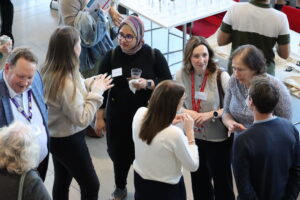
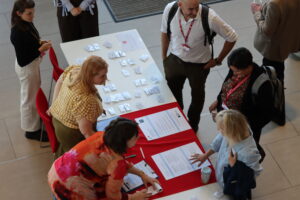
During lunch, attendees had the opportunity to network with other attendees and collaborating partners, including:
- National Centre for Mental Health
- Centre for Neuropsychiatric Genetics and Genomics
- Neuroscience and Mental Health Innovation Institute
- Adferiad
- Bipolar UK
- CONNECT
- DATAMIND
- National Centre for Suicide and Self-Harm Research
- Royal College of Psychiatrists
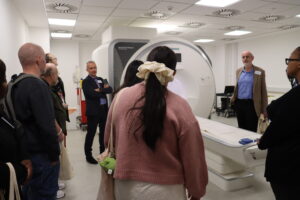
After lunch, attendees embarked on various breakout sessions, including tours of Cardiff University Brain Research Imaging Centre (CUBRIC), where the B-Sprint study takes place and a session on using your voice in research.
Artist Eleanor Beer delivered a workshop, asking attendees to represent their experience of feeling well and unwell through drawing, after documenting the morning’s talks. Eleanor also live captured the event as mural.
A mural of the day
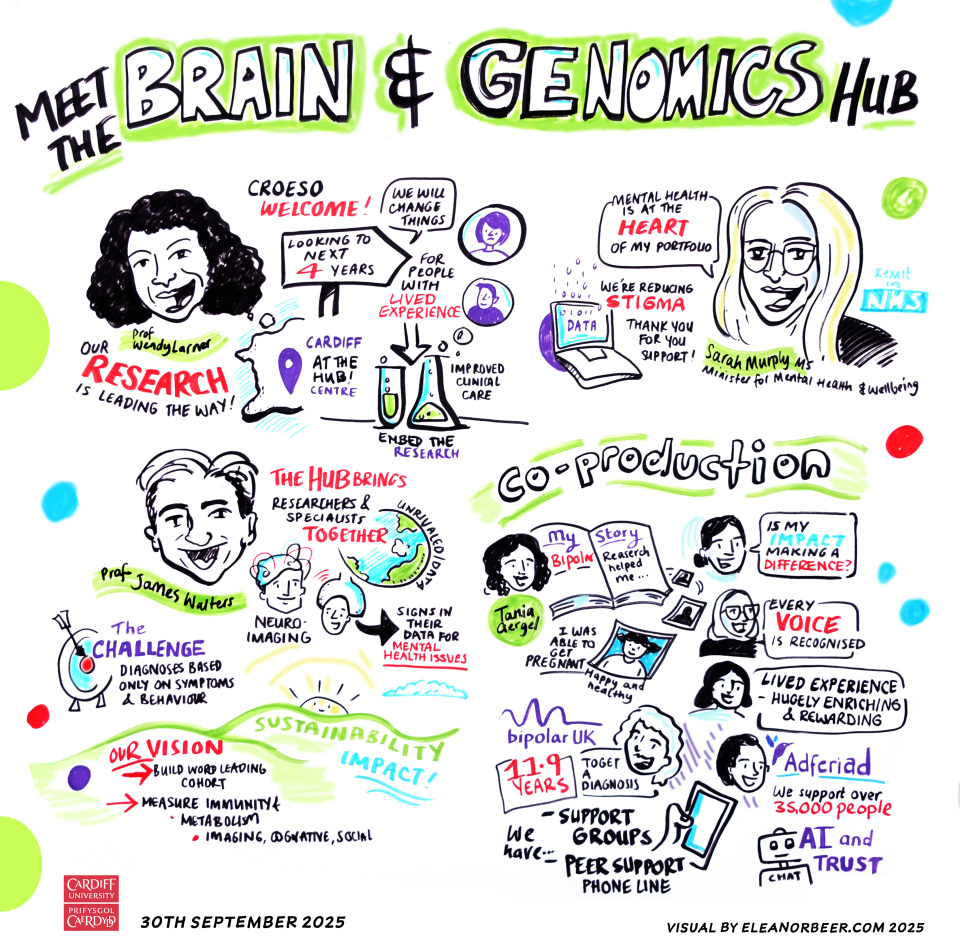
We would like to thank everyone for their attendance at the Brain and Genomics Hub launch and look forward to continuing our work together to advance the diagnosis and treatment of severe mental illness.
Learn more
- Visit the Brain and Genomics Hub website: https://braingenhub.co.uk/
- Take part in B-SPRINT
The Brain and Genomics Hub are recruiting 600 people with lived experience of psychosis, schizophrenia, bipolar and schizoaffective disorder. Visit the Hub website to find out more. - BBC News: Mental illness causes could be revealed by new major study
The Brain and Genomics Hub were recently featured in a BBC Wales article discussing their research into severe mental illness.
Resources
The National Centre for Mental Health have a leaflet library covering a wide-range of mental health conditions.
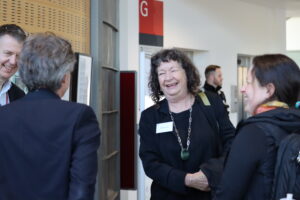
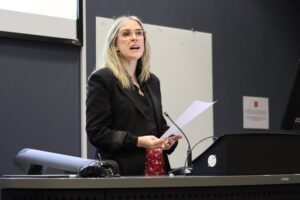
Event photo gallery



Subscribe to our blog
Sign up now and receive new blog posts to your inbox.